Hawaii OVUII Laws: Drunk Driving Charges and Penalties

Getting Started
Hawaii takes a strict approach to impaired driving enforcement, with mandatory ignition interlock requirements for all OVUII offenses and a zero-tolerance policy for underage drivers. Understanding Hawaii’s specific regulations, penalties, and recovery processes is essential for anyone facing a OVUII charge in the state.
If you’re arrested for OVUII in Hawaii, you face both administrative and criminal proceedings. The state’s OVUII laws focus on both administrative penalties through the Hawaii Department of Transportation (HIDOT) and criminal consequences through the court system.
Important Note: While this page provides detailed information, DUI.org does not offer legal advice. Laws can change, so consult a qualified OVUII attorney for personalized guidance.
Definitions to Know
OVUII (Operating a Vehicle Under the Influence of an Intoxicant)
Hawaii’s legal term for driving under the influence of alcohol, drugs, or prescribed medications. Hawaiians also sometimes refer to drunk driving charges unofficially as a DUI (driving under the influence).
IID (Ignition Interlock Device)
A breathalyzer installed in your vehicle that prevents the engine from starting if it detects alcohol on your breath.
SR-22
A certificate of financial responsibility that proves you have the minimum required liability auto insurance coverage after a DUI court-convicted suspension.
Administrative License Revocation
The process by which the Hawaii Department of Transportation suspends your driving privileges separate from any court action.
Hawaii Department of Transportation
The Hawaii Department of Transportation (HIDOT) oversees the administrative aspects of OVUII enforcement, including license revocations and the ignition interlock program. HIDOT processes administrative license revocations independent of court proceedings, manages restricted license applications, oversees the ignition interlock device program, and maintains records of OVUII offenses.
Steps to Take After OVUII in Hawaii
Here are the essential steps to take following a OVUII arrest in Hawaii:
- Hire an Attorney
A OVUII attorney familiar with Hawaii’s laws can help navigate both the administrative and criminal processes.
- Address License Revocation
Your license will be administratively revoked shortly after arrest unless you request a hearing.
- Request an Administrative Hearing
You have three days to submit a request for reconsideration from the date you were issued a notice of administrative revocation.
- Apply for Restricted License
If eligible, you may apply for conditional driving privileges by installing an ignition interlock device.
- Install an IID
Hawaii requires ignition interlock devices for all OVUII offenses to drive during a revocation period.
Explore IIDs -
File an SR-22 form
Before applying for any restricted license, if required.
- Complete Substance Abuse Evaluation
You’ll need to undergo assessment and complete any recommended treatment programs.
- Pay Fines and Fees
Court fines, license reinstatement fees, and other costs must be paid.
- Attend Court Proceedings
Your criminal case will proceed separately from administrative actions.
- Comply with All Requirements
Failure to meet court or administrative requirements can result in additional penalties.
OVUII Laws in Hawaii
What Are the Legal Driving Alcohol Limits in Hawaii?
Hawaii law establishes specific blood alcohol concentration (BAC) thresholds that define illegal driving behavior. Police officers typically use breathalyzers to measure breath alcohol concentration (BrAC) during traffic stops.
| Driver Category | Illegal BAC Limit |
| 21 and over | 0.08% |
| Commercial Drivers (CDL) | 0.04% |
| Under 21 | 0.02% (Zero Tolerance) |
Felony vs. Misdemeanor OVUII Charges
In Hawaii, most first and second OVUII offenses are classified as misdemeanors. However, certain circumstances can elevate a OVUII to a felony charge. A OVUII becomes a felony (typically a class C felony) when:
- It’s your third offense within ten years
- You cause serious bodily injury while driving under the influence
- You cause death while driving under the influence (can be charged as negligent homicide)
Felony OVUII convictions carry significantly harsher penalties, including longer prison sentences, higher fines, and extended license revocations compared to misdemeanor offenses.
Refusing a Chemical Test Under Hawaii OVUII Law
Hawaii, like most states, applies implied consent laws. By driving on Hawaii roads, you implicitly agree to chemical testing if arrested for OVUII. Refusing a chemical test has serious consequences separate from the OVUII charge itself.
| Number of refusals (within 10 years) | What happens to your license? | Other important points |
| First refusal | License taken away for about 2 years | You might be able to get a limited license if you install an ignition interlock device, but your driving will still be very restricted. |
| Second Refusal | License taken away for about 4 years | Harder to get any driving privileges; the state treats you as a repeat violator. |
| Third refusal | License taken away for about 8 years | Very serious; long‑term loss of license and big impact on work, family, and insurance. |
OVUII Penalties & Consequences
Penalties for OVUII Offenses in Hawaii
Hawaii imposes increasingly severe penalties for repeat OVUII offenses:
First Offense
Jail Time / Community Service: 48 hours to 5 days jail or 72 hours community service
Fines: $250 – $1,000
License Suspension / Revocation: 1 year- 18 months suspension
Other Requirements: 14-hour alcohol rehab, IID
Second Offense
Jail Time / Community Service: 5 to 30 days jail or 240 hours community service
Fines: $1,000 – $3,050
License Suspension / Revocation: 2 – 3-year revocation
Other Requirements: Substance abuse treatment, IID
Third and Subsequent Offense
Jail Time / Community Service: 10 day up to 5 years jail
Fines: $2,000 – $5,000
License Suspension / Revocation: 3 to 5 years revocation
Other Requirements: Extensive treatment, IID, possible forfeiture
Aggravating Factors That Increase Hawaii OVUII Penalties
Several circumstances can lead to enhanced penalties for OVUII offenses in Hawaii:
- High BAC Levels: BAC of 0.15% or higher typically results in increased minimum penalties.
- Child Passengers: Having a minor under 15 in the vehicle adds mandatory jail time and can trigger child endangerment charges.
- Causing Accidents: Crashes resulting in property damage, injury, or death dramatically increase penalties.
- Excessive Speed: Combining excessive speeding with OVUII leads to enhanced charges.
- Driving on a Suspended License: Operating a vehicle while already suspended for OVUII significantly worsens penalties.
- Prior Convictions: Multiple offenses within a lookback period result in escalating punishment.
Driving Without a Valid License
Operating a vehicle with a suspended or revoked license due to an OVUII in Hawaii is a serious offense with severe consequences. If caught driving without a valid license after an OVUII:
- You may face additional criminal charges
- Your original suspension period could be extended significantly
- You risk substantial additional fines
- You could face jail time
- Your vehicle may be impounded
- You’ll likely be disqualified from the ignition interlock program
- Insurance rates will increase even further
- Any chance of early license reinstatement will be eliminated
License Suspension
Who Determines if You Can Continue Driving After an OVUII
In Hawaii, two separate entities determine your driving privileges after a OVUII arrest:
- Administrative Process: The Hawaii Department of Transportation (HIDOT) handles administrative license revocations through a civil procedure that occurs regardless of criminal proceedings. This process begins shortly after arrest and can result in immediate license suspension.
- Criminal Court Process: The courts may impose additional license suspensions or restrictions as part of criminal sentencing. Court-ordered suspensions often run concurrently with administrative revocations but can extend them.
These parallel processes operate independently. You must address both to fully restore your driving privileges.
How Long Will Your License Be Suspended?
License suspension periods in Hawaii depend on the number of prior offenses and whether you refuse chemical testing. Below are the standard revocation periods:
| Offense | License Suspension Period | Eligible for Ignition Interlock |
| First Offense | 1 year – 18 months | Yes, after serving 30 days of revocation |
| Second Offense | 2 – 3 years | Yes, after serving longer minimum period |
| Third Offense | 3 to 5 years | Yes, with extended requirements |
| Refusal to Test | 5 to 8 years depending on prior history | Yes, with longer waiting period |
Steps to Reinstate Your License
To reinstate your driving privileges after a OVUII suspension in Hawaii:
- Complete your full suspension period or qualify for an ignition interlock permit
- Pay all reinstatement fees
- Complete required alcohol education or treatment programs
- Install an ignition interlock device if mandated
- Maintain an active SR-22 on file for three years, if required in your case
- Provide proof of completion for all court-ordered requirements
- Submit to assessment for ongoing substance abuse issues if required
Restoring Your Driving Privileges
Eligibility for a Conditional License
Hawaii offers conditional driving privileges through the ignition interlock program. Eligibility depends on:
- The nature of your OVUII offense
- Your prior driving and OVUII history
- Whether you refuse chemical testing
- Completion of minimum suspension periods
- Compliance with court-ordered requirements
- Installation and maintenance of an approved ignition interlock device
First-time offenses generally become eligible after serving at least 30 days of an administrative revocation period, while repeat offenses face longer minimum periods before eligibility.
How to Apply for Ignition Interlock Permit Privileges
To obtain conditional driving privileges in Hawaii:
- Serve the required minimum suspension period
- Complete application forms from the HIDOT
- Pay application and administrative fees
- Install an approved ignition interlock device from an authorized provider
- Provide proof of installation to HIDOT
- Complete any required substance abuse assessment or treatment
- Demonstrate need for driving privileges (employment, medical needs, etc.)
- Maintain a clean driving record during the conditional license period
Hawaii Ignition Interlock Device (IID) Requirements
Hawaii’s ignition interlock program is mandatory for anyone wishing to drive during an OVUII license revocation period. The program requires:
- Installation by a state-approved vendor
- Regular calibration and maintenance checks
- Payment of all installation and monthly monitoring fees
- Clean breath samples before starting vehicle
- Random retests while driving
- Download of data records at specified intervals
- No attempts to tamper with or circumvent the device
- Completion of the full revocation period without violations
Violations of ignition interlock requirements can result in extension of revocation periods or complete removal from the program.
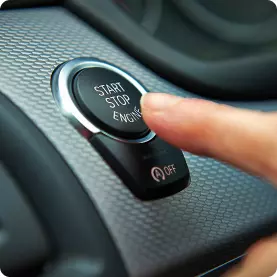
Selecting the right ignition interlock provider can make a world of difference.
SR-22 Insurance Requirements
Hawaii requires SR-22 filing for high-risk drivers to prove they maintain at least the state’s minimum liability insurance. The minimum required coverage in Hawaii is $20,000 per person and $40,000 per accident for injuries, plus $10,000 for property damage. Hawaii is a no-fault state with a $10,000 minimum personal injury protection requirement.
Who Needs SR-22 in Hawaii
SR-22 forms may be required if a driver has a record of serious infractions, such as:
- Driving under the influence (DUI/DWI)
- At-fault accidents
- Reckless driving
- Driving with a suspended or revoked license
- Driving without insurance
- Multiple smaller violations within a short timeframe.
Duration of SR-22 Requirement
In Hawaii, SR-22 insurance is typically mandated for a minimum of three years after the qualifying offense. If your insurance lapses during this period, the duration may reset and you could face further penalties.
How to File an SR-22
To file an SR-22, contact your insurance company; they will submit the required form with the Hawaii Department of Motor Vehicles on your behalf. Both vehicle owners and non-owners who need to prove financial responsibility may be required to obtain this type of certification.
Maintaining continuous coverage and timely renewal is essential to stay compliant with Hawaii’s SR-22 requirements.
Substance Abuse Evaluation and Treatment
Hawaii requires drivers convicted of an OVUII to undergo substance abuse evaluation and often mandates completion of treatment programs. This typically includes:
- Assessment by a state-approved provider
- Completion of the 14-hour minimum alcohol education program for first offenders
- More extensive treatment for drivers with multiple convictions or those with high BAC levels
- Regular attendance verification and progress reports to the court
- Possible mandatory participation in support groups
- Potential random drug and alcohol testing
- Completion certificates submitted to both courts and HIDOT

Understand what to expect and how to prepare for a substance abuse evaluation.
FAQs About OVUIIs in Hawaii
Can you drive to work during your suspension?
You can drive to work during your license suspension only if you install an ignition interlock device and obtain a conditional permit after serving the minimum suspension period.
Will your OVUII appear on background checks?
Yes, a OVUII conviction remains on your criminal record and is visible on background checks unless legally expunged.
How long does a OVUII stay on your driving record in Hawaii?
OVUII offenses remain on your driving record and count toward enhanced penalties for 10 years.
Sources
- FindLaw. (n.d.). What are the Hawaii DUI laws? Retrieved from https://www.findlaw.com/state/hawaii-law/what-are-the-hawaii-dui-laws.html
- Hawaii State Department of Health. (n.d.). State Laboratories Division: DUI. Retrieved from https://health.hawaii.gov/statelab/dui/
- Justia. (n.d.). Hawaii Revised Statutes § 291E-61 – Operating a vehicle under the influence of an intoxicant. In Hawaii Revised Statutes. Retrieved from https://law.justia.com/codes/hawaii/title-17/chapter-291e/section-291e-61/
- National College for DUI Defense. (n.d.). Hawaii DUI laws. Retrieved from https://www.ncdd.com/hawaii-dui-laws
- State of Hawaii Department of Transportation. (2021). Hawaii drivers manual (5.375 x 8.375 revised final). Retrieved from https://hidot.hawaii.gov/highways/files/2021/03/2020-Hawaii-Drivers-Manual_5.375×8.375_Revised-FInal_WEB.pdf
- State of Hawaii Department of Transportation. (n.d.). Hawaii ignition interlock program. Retrieved from https://hidot.hawaii.gov/ignitioninterlock/
Get support.
What is next? We can help you through the process. Give us a little information and we can support you through the next steps.
All fields are required.