New Hampshire DWI Laws: 2025 DWI Charges Guide
New Hampshire takes a firm stance on impaired driving with a multi-tiered approach to penalties based on offense count and aggravating factors. First-time offenses see mandatory license revocation and potential jail time, while people with multiple DWIs encounter increasingly severe consequences including felony charges for third-time DWI convictions.

Getting Started
Being charged with a DWI (Driving While Intoxicated) in New Hampshire can be confusing and overwhelming. This guide provides general information about New Hampshire’s DWI laws, processes, and requirements following an arrest. This document does not constitute legal advice; consult with a qualified DUI attorney for guidance specific to your situation.
Important Note: While this page provides detailed information, DUI.org does not offer legal advice. Laws can change, so consult a qualified DWI attorney for personalized guidance.
Definitions to Know
DWI (Driving While Intoxicated)
New Hampshire’s legal term for driving while under the influence of alcohol or drugs.
SR-22
A certificate of financial responsibility that proves you have the minimum required liability auto insurance coverage after a DUI court-convicted suspension.
IID (Ignition Interlock Device)
A breathalyzer installed in your vehicle that prevents it from starting if alcohol is detected on your breath.
New Hampshire Department of Safety Division of Motor Vehicles
The New Hampshire DMV handles administrative license revocations, restricted license applications, SR-22 monitoring, and ignition interlock device oversight for DWI offenses. The DMV enforces administrative penalties separate from criminal court sanctions, maintains records of DWI convictions, and processes license reinstatements once all requirements are met.
Steps to Take After DWI Arrest in Texas
- Hire an Attorney
Legal counsel can help navigate both administrative and criminal processes.
- License Suspension
Expect your driver’s license to be suspended after arrest, separate from any court-ordered suspension.
- Request an Administrative Hearing
If disputing a suspension, you must request a hearing with the DMV promptly.
- Apply for a Restricted License
If eligible, you may apply for limited driving privileges by installing an IID.
Explore IIDs - Install an IID
Required for certain offenses involving high-BAC convictions or repeat offenses.
- File an SR-22 Form
This proof of financial responsibility may be required for license reinstatement after a DUI revocation in New Hampshire.
- Complete Substance Abuse Evaluation and Treatment
You’ll need to undergo an evaluation and complete any recommended programs through the Impaired Driver Care Management Program (IDCMP).
- Pay Fines and Fees
Court fines range from several hundred to several thousand dollars plus additional fees for license reinstatement.
- Attend Court Proceedings
Your case will proceed through criminal court independently from administrative actions.
- Probation
Probation terms may include regular check-ins and abstaining from alcohol or drugs.
- Avoid Further Violations
Any new DWI violations during a license restriction period can result in extended suspension periods and potentially jail time.
DWI Laws in New Hampshire
What Are the Legal Driving Alcohol Limits in New Hampshire?
In New Hampshire, it’s illegal to drive if you’re under the influence of alcohol, drugs, or both. The law sets clear blood alcohol concentration (BAC) limits based on your age and license type. Police often use a breathalyzer to quickly check your Breath Alcohol Concentration (BrAC).
| Driver Category | Legal BAC Limit |
| Drivers over 21 | 0.08% |
| Commercial Drivers | 0.04% |
| Drivers under 21 | 0.02% (Zero Tolerance) |
Felony vs Misdemeanor DWI Charges
In New Hampshire, DWI offenses can be classified as either misdemeanors or felonies depending on the circumstances. First and second DWI offenses within a 10-year period are typically charged as misdemeanors. However, a third DWI offense within 10 years brings felony-level penalties, including indefinite license revocation. You may not petition for reinstatement for at least 5 years after conviction. Additionally, any DWI involving serious bodily injury or death can be charged as a felony regardless of prior offense history.
Misdemeanor DWI penalties include fines, license suspension, alcohol education, and potential jail time. Felony DWI convictions carry more severe consequences including longer license revocation periods, mandatory jail sentences, higher fines, and required participation in substance abuse treatment programs.
What Are Drunk Driving Diversion Programs in New Hampshire?
New Hampshire offers the Impaired Driver Care Management Program (IDCMP) for certain DWI offenses. This is not a traditional diversion program that allows charges to be dismissed, but rather a required intervention program. Drivers with a first-time low-BAC DWI may be eligible for reduced penalties if they complete the program successfully. The program includes substance abuse evaluation, education, and treatment components administered through the Department of Health and Human Services.
Refusing a Chemical Test Under New Hampshire DWI Law
New Hampshire applies implied consent laws; if you drive on state roads, you implicitly agree to chemical testing if arrested for suspected DWI. Refusing a test will result in automatic administrative license suspension that’s separate from any criminal penalties.
| Offense | Penalty for Test Refusal |
First Refusal | 6-month license suspension |
| Second+ Refusal | 2-year license suspension |
Even if you refuse testing, officers can obtain a warrant to draw your blood forcibly in many circumstances.
DWI Penalties & Consequences
Penalties for DWI Offenses in New Hampshire
Penalties for DWIs in New Hampshire become progressively severe with each conviction:
First Offense
Jail Time: Up to 1 year (may be suspended)
Fines: $500 +
License Suspension: 9 months – 2 years
Second Offense
Jail Time: 17 days – 1 year (minimum 5 days served)
Fines: $750 +
License Suspension: 18 months -3 years
Third Offense
Jail Time: 180 days – 1 year
Fines: $750+
License Suspension: Indefinitely
Fourth+ Offense (Felony)
Jail Time: 1-7 years
Fines: $4,000+
License Suspension: Lifetime revocation
Aggravating Factors That Increase New Hampshire DWI Penalties
In New Hampshire, these aggravating factors lead to elevated criminal charges, harsher fines, longer jail or prison time, extended license suspensions, and additional requirements:
- BAC level of 0.16% or higher (aggravated DWI)
- Causing an accident resulting in serious injury or death
- Driving with a child under 16 in the vehicle
- Exceeding the speed limit by 30 mph or more while intoxicated
- Attempting to elude police while intoxicated
- Having multiple prior DWI convictions within 10 years
- Driving with a suspended license from a previous DWI
Driving Without a Valid License
Driving with a suspended license due to a DWI in New Hampshire is a serious offense that carries significant penalties. If caught, you may face an additional year of license suspension, potential jail time, substantial fines, and vehicle registration revocation. This violation can also reset any progress toward license reinstatement and jeopardize eligibility for restrictive driving privileges. Additionally, insurance companies view this violation extremely negatively, potentially resulting in policy cancellation or significantly increased premiums when you eventually regain driving privileges.
License Suspension
Who Determines if You Can Continue Driving After a DWI
Both the New Hampshire Division of Motor Vehicles (DMV) and the courts play roles in determining driving privileges after a DWI arrest. The DMV handles the administrative license suspension process, which begins immediately after arrest for failed or refused tests. Separately, the criminal court may impose its own suspension as part of sentencing. Each process affects your driving privileges differently and runs independently of the other.
The administrative suspension through the DMV is automatic unless you request a hearing. The criminal court suspension depends on your case outcome and becomes effective upon conviction. These dual processes can result in overlapping or consecutive suspension periods.
How Long Will Your License Be Suspended?
Getting your license suspended in New Hampshire means you are no longer allowed to drive a vehicle, unless you obtain a restricted license during your suspension. Here’s how long your regular license may be suspended for a DWI in New Hampshire:
| Offense | Suspension Period |
| First Offense | 9 months to 2 years |
| Second Offense | 3 years |
| Third Offense | Indefinitely (may petition for reinstatement after 5 years) |
| Fourth Offense | Lifetime revocation (may petition for reinstatement after 7 years) |
Steps to Reinstate Your License
- Serve the full suspension period.
- Pay reinstatement fees to the DMV.
- Provide proof of insurance via SR-22 form (must maintain for 3 years) if required
- Complete required IDCMP education and treatment programs.
- Install an IID if mandated by court or administrative order.
- Pass a driver’s license re-examination if required.
Restoring Your Driving Privileges
Following a DWI in New Hampshire, restoring full driving privileges requires completing all court-ordered requirements, serving the suspension period, and fulfilling DMV reinstatement conditions. The process varies based on offense number and circumstances. Drivers with multiple DWI convictions face more stringent requirements including mandatory IID installation periods.
Eligibility for a Restricted License
New Hampshire offers restricted license options for some DWI offenses who demonstrate need. Drivers with one DWI offense may be eligible after serving a portion of their suspension. Eligibility depends on:
- Completion of required substance abuse screening
- No prior DWI convictions within 10 years
- Installation of an ignition interlock device
- Proof of employment need or medical necessity
- Enrollment in required treatment programs
Restricted licenses permit travel only to specific approved locations such as work, school, medical appointments, or substance abuse treatment.
How to Apply for Restricted Driving Privileges
- Complete and submit application forms to the NH DMV.
- Install an IID on your vehicle.
- Submit SR-22 as proof of insurance coverage, if required
- Provide documentation of need (e.g., employment verification or medical necessity).
- Submit proof of enrollment in substance abuse program.
- Pay applicable fees.
- Attend any required hearings.
New Hampshire Ignition Interlock Device (IID) Requirements
New Hampshire requires ignition interlock devices for various DWI offenses. Drivers with a first-time DWI with aggravated circumstances (high BAC or other factors) must use an IID for 12 months after license reinstatement. Second and subsequent offenses face longer IID requirements, typically lasting 12-24 months. The device must be installed in all vehicles you own or regularly operate.
Installation requires using a state-approved vendor who will calibrate the device to your specific requirements. You’re responsible for all costs associated with the device, including installation (typically $70-$150), monthly maintenance fees ($60-$90), and removal. The device requires periodic recalibration, and any tampering or attempts to circumvent the device will result in additional penalties. All test results are reported to the monitoring authority.
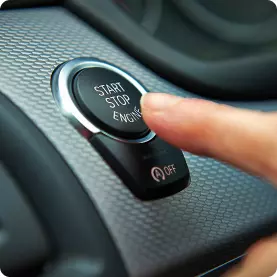
Selecting the right ignition interlock provider can make a world of difference.
SR-22 Insurance Requirements
If you are convicted of a DWI in New Hampshire, you may be required to obtain and maintain SR-22 insurance as proof of financial responsibility. The SR-22 must be filed with the DMV before your license can be reinstated. For a first DWI offense, you may be required to maintain SR-22 coverage for 3 years following your conviction. If your policy lapses or is canceled during this period, your license could be suspended again. SR-22 can be required whether or not you own a car, non-owner policies are available to meet this requirement.

Let us help connect you to the right licensed insurance specialist for you.
Substance Abuse Assessment and Treatment
New Hampshire requires anyone with a DWI conviction to complete the Impaired Driver Care Management Program (IDCMP) through the Department of Health and Human Services. The process begins with a substance abuse evaluation to determine the appropriate level of intervention. Based on evaluation results, you may be required to complete:
- Education sessions about alcohol/drug use and impaired driving
- Outpatient counseling
- Intensive outpatient treatment
- Inpatient treatment for more severe substance use disorders
Program costs vary by provider and the required level of treatment. Completion of the assigned program is mandatory for license reinstatement. The program aims to fulfill legal requirements and address underlying substance use issues and prevent future impaired driving incidents.

Understand what to expect and how to prepare for a substance abuse evaluation.
FAQs About DWIs in New Hampshire
Can you drive to work after a DWI in New Hampshire?
Possibly, if you qualify for a restricted license with an ignition interlock device installed.
Is New Hampshire’s DWI law a zero-tolerance law for drivers under 21?
Yes, drivers under 21 with a BAC of 0.02% or higher can be charged with DWI.
Can you refuse a breathalyzer test in New Hampshire?
You can refuse, but under implied consent laws, this results in automatic license suspension regardless of whether you’re eventually convicted of DWI.
Sources
- New Hampshire Department of Health and Human Services. (n.d.). Impaired Driving Program. Retrieved from https://www.dhhs.nh.gov/programs-services/alcohol-tobacco-other-substance-misuse/impaired-driving-program
- New Hampshire Department of Safety Division of Motor Vehicles. (n.d.). Retrieved from https://www.nh.gov/safety/divisions/dmv
- FindLaw. (n.d.). What Are the New Hampshire DUI Laws. Retrieved from https://www.findlaw.com/state/new-hampshire-law/what-are-the-new-hampshire-dui-laws.html
- National College for DUI Defense. (n.d.). New Hampshire DWI Laws. Retrieved from https://www.ncdd.com/new-hampshire-dwi-laws
- New Hampshire Division of Motor Vehicles. (n.d.). Rules and Laws. Retrieved from https://www.dmv.nh.gov/rules-and-laws
- New Hampshire Division of Motor Vehicles. (n.d.). Ignition Interlock Program. Retrieved from https://www.dmv.nh.gov/tickets-accidents-or-restorations/ignition-interlock-program
Get support.
What is next? We can help you through the process. Give us a little information and we can support you through the next steps.
All fields are required.