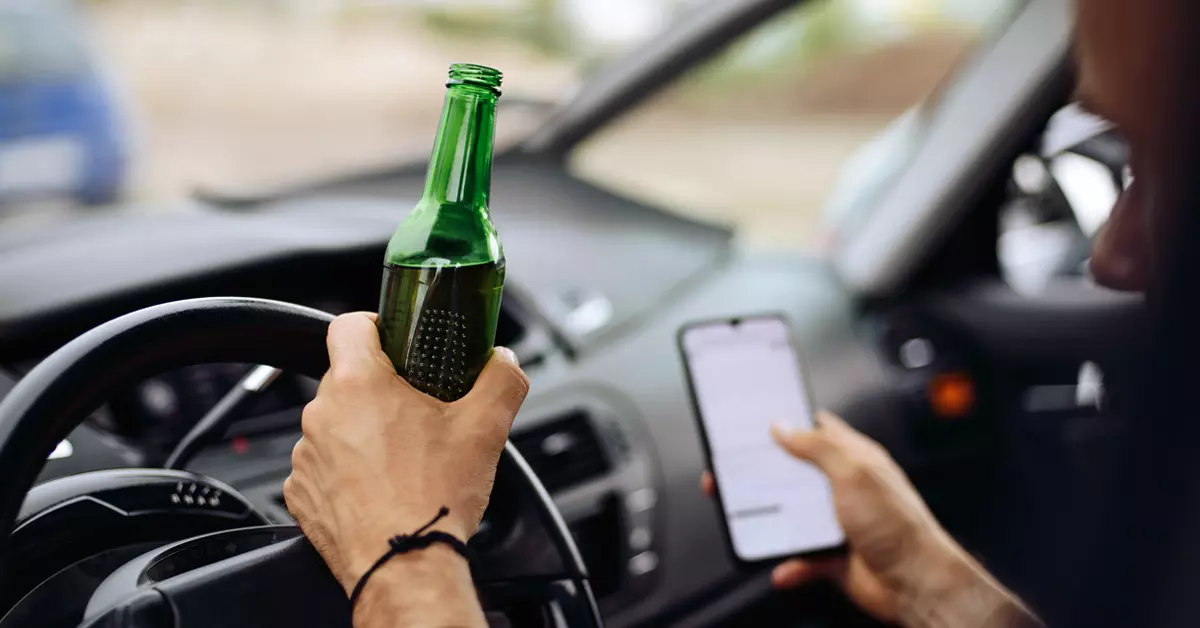
Self-driving technology can assist with steering and braking, but it does not remove your legal responsibility.
Key Takeaways:
- You can get a driving under the influence (DUI) in a self-driving car under the current laws in most states.
- Systems like Tesla Full Self-Driving (Supervised) require active driver attention and legal accountability.
- Lawmakers continue to study fully autonomous vehicles, but today’s driver-assist systems do not shield you from DUI charges.
You leave a restaurant after drinking. Your vehicle offers advanced driver-assistance features. You activate the system and assume the car will handle the drive home.
Can you get a DUI in a self-driving car?
In most states, yes.
Current DUI laws focus on whether you're operating or in physical control of the vehicle while impaired. If you are sitting in the driver’s seat and the vehicle is traveling on a public roadway, law enforcement can treat you as the responsible driver, even if automation is assisting with steering or speed control.
The article is for general informational purposes only and does not constitute legal advice. Laws vary by state and readers should consult a licensed attorney in their jurisdiction; DUI.org is not a law firm. If you have immediate questions about a DUI, call a DUI.org state specialist at (877) 246-7808.
Who Is Responsible When the Car Is Driving Itself?
Modern vehicles often include adaptive cruise control, lane centering, and automated braking. Federal regulators classify most of these systems as driver-assistance technologies, not full autonomy.
The National Highway Traffic Safety Administration (NHTSA) explains that currently available automated systems require the human driver to remain engaged and always ready to take control. In other words, the vehicle can assist, but it does not replace the driver.
That distinction is what drives DUI enforcement.
The Time a Waymo Pulled an Illegal Move in Front of a Cop
In a widely reported incident, a fully autonomous vehicle operated by Waymo executed an unusual traffic maneuver in front of a police officer. No human driver was sitting behind the wheel when the officer attempted a stop.
That scenario highlights the difference between a truly autonomous commercial fleet vehicle and a privately owned vehicle equipped with supervised automation.
A fully autonomous ride-hailing vehicle operates under specific regulatory approvals and controlled geographic conditions. Responsibility in those cases may lie with the operating company rather than with the passenger.
What Does That Mean for Driving Under the Influence?
Most state DUI laws use terms such as “driving,” “operating,” or “actual physical control” to determine whether someone is legally considered in control of a vehicle while intoxicated.
Courts interpret these terms broadly.
If you are sitting in the driver’s seat, activate a self-driving vehicle, and still have the ability to take control, law enforcement and courts can determine you are operating the vehicle. That interpretation applies even when advanced automation is handling the driving tasks.
This means if you drink and then activate a self-driving vehicle, you could still face DUI charges. The key issue is not whether the steering wheel turns itself. The issue is whether you have control over the vehicle’s operation.
Waymo Versus Tesla Full Self-Driving: Legal Distinction
Not all self-driving technology carries the same legal implications. The level of autonomy determines how courts assign responsibility to the human in the driver’s seat or to the company responsible for the self-driving vehicle.
What the Law Says About Self-Driving Cabs
Fully autonomous ride-hailing vehicles drive themselves without a human behind the wheel. In areas where they are legally approved to operate, the passenger is not considered the driver.
However, these vehicles function under specific regulatory approvals and geographic limitations. Even then, lawmakers continue to debate how DUI laws apply if a passenger drinks inside a fully autonomous vehicle.
Advocacy organizations such as Mothers Against Drunk Driving look at how emerging technologies relate to impaired-driving enforcement. However, these fully autonomous systems remain limited in scope and availability.
What the Law Says About Full Self-Driving Mode
Tesla markets a Full Self-Driving (Supervised) mode. But this advanced driver-assistance feature requires drivers to keep their hands on the wheel and remain prepared to take over immediately.
That requirement to be available to step in establishes legal responsibility to the person in the driver's seat.
Courts generally treat supervised automation as assistance rather than a replacement for the driver. If you engage Tesla’s Full Self-Driving feature because you had too much to drink, law enforcement will likely view you as the driver and can still charge you with DUI.
If law enforcement stops your self-driving vehicle at a checkpoint, they can assess your impairment level just as they would in any other vehicle.
Visit this article from DUI.org to learn about your rights at DUI checkpoints.
Law Changes on the Horizon
Autonomous vehicle technology continues to advance, and lawmakers continue to study its implications. For now, DUI laws across the country remain grounded in human accountability.
Federal Laws
The federal government does not define DUI offenses. Instead, each state writes and enforces its DUI laws, including those related to self-driving vehicles. The federal government, however, regulates vehicle safety and automation standards through agencies such as NHTSA.
According to NHTSA, most automated driving systems on the road today still require the driver to be attentive and ready to take over immediately. The driver must actively supervise the system and is legally responsible.
Researchers are also studying how autonomous vehicles might affect alcohol consumption and driving behavior. Some findings suggest that when people believe a car can drive itself, they may feel more willing to take risks. Lawmakers are continuing to review these findings as the technology evolves.
State-by-State Laws
Each state defines DUI independently. Many states allow DUI charges when a person exercises any “actual physical control” of a vehicle, even if the vehicle does not move. Supervised automation does not reliably protect you from liability as the driver. Until states revise their DUI laws to account for fully autonomous Level 4 or Level 5 systems (able to operate and drive without human supervision), and most courts still treat the person in the driver’s seat as responsible when impaired.
Most drivers remain legally responsible when impaired behind the wheel of a self-driving vehicle.
If you are already facing a DUI charge and want to understand the potential outcomes and how you may be able to mitigate the consequences, review our resource on DUI reduction chances.
Know Your Legal Responsibilities Before Engaging Full Self-Driving Mode
Self-driving technology does not create a legal loophole for drinking and driving under current law.
If you plan to drink, arrange a truly sober ride with a designated driver, rideshare service, or taxi. Treat supervised automation as assistance, not immunity.
If you are already facing a DUI charge, DUI.org can provide clear, step-by-step information on what to expect next, including requirements such as an ignition interlock device.
Understand your responsibilities before operating a self-driving car. Visit DUI.org for a better understanding of today's DUI laws. You can also call (877) 246-7808 to speak directly with one of our specialists.
Frequently Asked Questions
Can you get a DUI in a self-driving Tesla?
Yes, it is likely that you can get a DUI in a self-driving Tesla. Tesla’s Full Self-Driving (Supervised) system requires active driver oversight. If you sit in the driver’s seat while impaired and the vehicle operates on a public road, officers can charge you with DUI under most state laws.
How do self-driving cars work?
Most self-driving vehicle systems rely on cameras, radar, ultrasonic sensors, and onboard software to detect road conditions. The software processes data in real time and adjusts steering, braking, or acceleration. In supervised systems, the driver must still be ready to intervene immediately.
Can sleeping in a self-driving car prevent a DUI?
Sleeping in a self-driving car likely will not prevent a DUI charge. In many states, it does not matter if you were actively steering the vehicle. If you had physical control, such as by sitting in the driver's seat, officers can charge you with DUI, even if you were asleep.
Tesla, Full Self-Driving, and Waymo are trademarks of their respective owners. DUI.org is not affiliated with or endorsed by Tesla, Inc. or Waymo LLC.
Get support.
What is next? We can help you through the process. Give us a little information and we can support you through the next steps.
All fields are required.