This article is for general informational purposes only and does not constitute legal advice. Laws vary by state, and readers should consult a licensed attorney in their jurisdiction; DUI.org is not a law firm. DUI.org specialists are available for questions about ignition interlock devices and SR-22 insurance requirements.
Many people assume a DUI automatically appears on their passport or blocks international travel. Here's the truth.
Key Takeaways:
- A DUI does not appear on the physical passport itself.
- Border agents may access your criminal history through government databases when they scan your passport.
- Countries like Canada may deny you entry based on a DUI conviction, even if you do not need a visa.
After waiting in a long customs line for your trip abroad, you finally step up to the border agent. They scan your passport, pause, and ask a few extra questions. Suddenly, your past DUI comes up, and now you’re left wondering whether your trip will continue or end right there.
Travel after a DUI can get complicated. Different countries apply different entry rules. U.S. Customs and Border Protection also reviews traveler information through federal systems.
Read further to learn what information, if any, shows up in your passport, and how it can affect your ability to travel internationally.
How Does a DUI Affect Your Passport?
Your passport, travel plans, and visa application are three separate things, and each has its own considerations. Here is a breakdown of how each one works, starting with what a DUI means for your passport itself.
DUI Impact: Applying for or Renewing a Passport
Let’s answer the main question directly: Does a DUI show up on your passport?
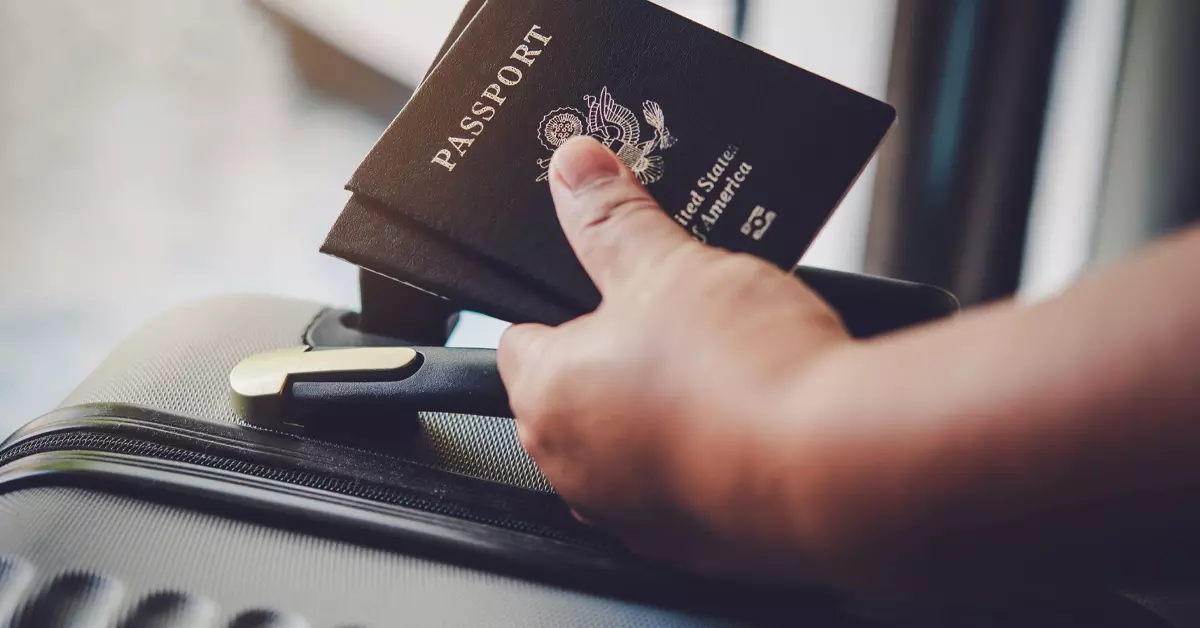
No. A DUI does not appear on the physical passport booklet. Your passport contains identifying information such as your name, date of birth, nationality, and passport number. It does not list criminal convictions.
In most cases, a single DUI conviction does not prevent you from applying for or renewing a U.S. passport. However, if your DUI involved a controlled substance and qualifies as a felony drug offense under federal or state law, particularly if it occurred while you were crossing an international border, federal law (22 U.S.C. § 2714) may require the State Department to deny or revoke your passport while you are imprisoned or on supervised release. This is a mandatory denial, not a discretionary one. If you face a drug-related DUI, consult with an attorney before applying for a passport.
However, specific situations can affect your eligibility. According to the U.S. Department of State, a court may restrict the issuance of a passport if you are on probation or parole and subject to travel limitations. A similar case could occur if a judge orders you to surrender your passport as part of your sentence. You can review federal passport eligibility guidelines at Travel.State.gov.
The court order controls if the terms of your probation prohibit you from traveling internationally. Your DUI status does not appear on your passport, but the legal restrictions tied to your sentence can limit your ability to use it.
DUI Impact: Upcoming Travel Plans
Even though a DUI does not appear on your passport, border agents may still access your criminal records through secure government databases.
As an officer scans your passport, they check more than the booklet in your hand. They may review linked databases that contain law enforcement or immigration information.
For U.S. citizens traveling abroad, the foreign country decides who enters. Some countries ask about your criminal history on entry forms or visa applications. Others rely on shared border information systems.
For travelers entering the United States, U.S. Customs and Border Protection (CBP) reviews your admissibility under U.S. immigration law. You can read more about DUI-related entry questions through CBP’s guidance on entering the United States with DUI offenses.
Does a DUI show up on your passport? No. But that does not mean it's invisible during international screening.
Before booking travel, review our guide: DUI Travel Restrictions: Where You Can and Can’t Go After a DUI Conviction.

DUI Impact: Future Visa Applications
Countries that require a visa for entry often ask directly about criminal convictions.
If you apply for a visa, the application may require you to disclose any prior arrests or convictions, including DUI. Providing false information can result in denial or future bans.
Some countries conduct background checks as part of the visa process. The U.S. Department of State explains how criminal record checks work for international travel on its criminal records resource page.
Honesty matters. Even if a DUI does not appear on your passport, you must disclose it on a visa application, if requested.
Other Travel Restrictions with a DUI
Your passport may not display a DUI, but border officers will still evaluate your admissibility. Each country decides who it allows to enter, and a DUI can affect that decision in different ways.
Traveling to the United States
If your international friend has a DUI and plans to visit the U.S., their admissibility depends on the applicable immigration law.
A single DUI without aggravating factors usually does not automatically bar a person from entering the country. However, multiple convictions or related offenses can raise concerns. CBP officers review the case details when assessing a person's eligibility to enter America.
Visitors entering under the Visa Waiver Program must answer criminal history questions truthfully. Misrepresentation can trigger long-term consequences.
Traveling to Canada
Canada takes a stricter approach than the U.S.
Under Canadian law, a DUI can make a person criminally inadmissible. Even one conviction may result in denied entry at the border. Canada treats DUI convictions as serious criminal offenses under its Immigration and Refugee Protection Act (IRPA). If your DUI conviction occurred on or after December 18, 2018, you will almost certainly be found criminally inadmissible and will need either a Temporary Resident Permit (TRP) or Criminal Rehabilitation approval before attempting to enter Canada. If your single DUI conviction occurred before December 18, 2018, you may, depending on the circumstances, qualify for 'deemed rehabilitation' after 10 years from the completion of your full sentence, but this is not automatic and requires you to carry certified documentation. Because the rules are complex and the consequences of an inadmissibility finding at the border are serious, consult a Canadian immigration attorney before planning travel to Canada.

If Canada is on your travel list, read our detailed breakdown: Can You Go to Canada with a DUI?
Many travelers get turned away because they assume a DUI does not matter. It does in Canada.
Traveling to Mexico
Mexico can deny entry to individuals with serious criminal convictions. Enforcement varies, and border decisions often depend on how recent or severe the offense appears.
Mexico's immigration law permits officials to deny entry if you’re convicted of serious crimes, but standard misdemeanor DUI convictions are generally not treated as disqualifying offenses under Mexican law. In practice, Mexican border agents typically do not run routine criminal background checks on tourist arrivals. That said, a felony DUI, particularly one involving injury, death, drug charges, or multiple convictions, carries a higher risk of attracting scrutiny. As with all international travel, entry decisions are ultimately at the discretion of the immigration officer on duty.
Always verify the current entry requirements before traveling.
Other Travel Destinations
Countries such as Japan, Australia, and the United Arab Emirates ask about a person's criminal history on visa applications. Each country sets its standards.
Visa-free entry does not guarantee automatic admission. Border officers maintain discretion at ports of entry worldwide.
Before you travel, review the U.S. Department of State’s country-specific guidance to understand entry requirements and local laws. Checking official country information in advance helps you avoid unexpected questioning, denied boarding, or refused entry upon arrival.
Can I Rent a Car Internationally with a DUI?
Rental car companies in most countries operate under private policies. Some check renters’ driving records. Others focus only on the validity of their driver's license.
If your DUI resulted in a license suspension, an ignition interlock requirement, or insurance restrictions, those issues may affect your eligibility to rent a car internationally.
Before leaving the country, confirm that your license is in good standing. If you use an ignition interlock device, understand how the monitoring requirements work while you are traveling.
If you want a broader overview, review: Rental Vehicle Rules and Restrictions for International Travel with a DUI.

We’re Here to Answer Your DUI Questions
A DUI conviction can significantly impact your ability to travel both domestically and internationally, creating complications with border crossings, visa applications, and various restrictions. The passport itself does not list your DUI. Still, border screening systems and foreign entry laws can affect your plans.
Get informed on any travel document restrictions that might apply to you after a DUI, whether U.S.-based or abroad.
Call DUI.org at (877) 246-7808 today. We provide no-cost guidance to help you understand license restoration and ignition interlock requirements, and the steps you need to take to move forward with clarity and confidence.
Frequently Asked Questions About DUI and Travel
Can you get a passport with a DUI?
A DUI alone is likely not enough to prevent you from getting a passport. A standard DUI conviction does not automatically disqualify you from obtaining or renewing a U.S. passport. However, court-ordered travel restrictions or the terms of your probation may limit your ability to use it.
Can you get a passport while on probation for a DUI?
Possibly. You may apply for a passport, but the terms of your probation may restrict your ability to travel internationally. Some courts require a person to surrender their passport as part of their sentence. Always check your sentencing documents before making travel plans.
Does someone with a DUI felony qualify for a passport?
Often, yes. A felony DUI alone does not automatically prohibit the issuance of a passport. However, related factors such as outstanding warrants, court orders, or parole conditions may affect a person's eligibility for a passport.
Does a DUI show up on your passport when scanned?
The DUI does not appear printed on your passport. However, when border agents scan your passport, they may access linked law enforcement databases that contain your criminal history information.
Get support.
What is next? We can help you through the process. Give us a little information and we can support you through the next steps.
All fields are required.