The article is for general informational purposes only and does not constitute legal advice. Laws vary by state and country, and readers should consult a licensed attorney in their jurisdiction. DUI.org is not a law firm. If you have immediate questions about a DUI, call a DUI.org state specialist at (877) 246-7808.
Understanding how public drunkenness laws work across states may help you avoid unexpected legal trouble.
Key Takeaways:
- Public drunkenness laws vary widely, and behavior that seems harmless in one state can lead to a charge in another.
- Walking home, riding a bike, or taking public transit after drinking can still carry legal risk.
- Planning rides in advance can help you avoid fines, citations, or DUI charges.
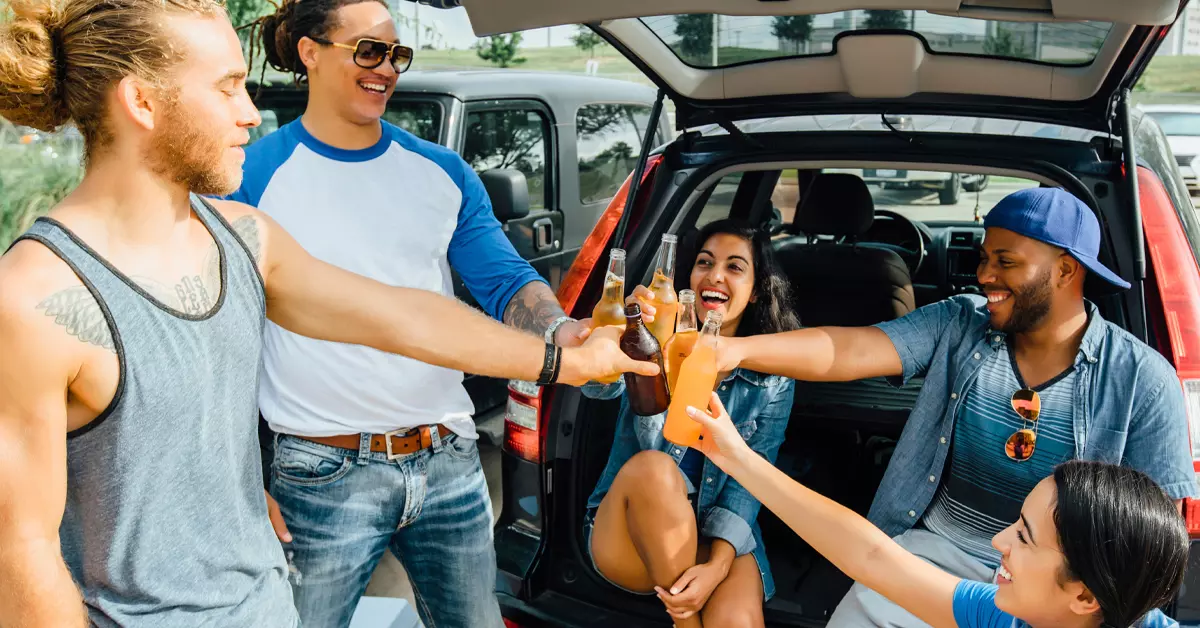
You leave a football game, grab food with friends, have some beers, and decide to walk home instead of driving. It feels like the responsible choice to avoid driving drunk because you’re not behind the wheel.
But in some states, walking while intoxicated can lead to a citation if an officer believes your level of impairment creates a safety risk.
Public drunkenness laws vary widely across the country, including in college towns. In some places, enforcement focuses on behavior that creates a risk to you or others. In others, simply appearing visibly impaired in public can justify a charge. The same uncertainty may apply to biking, using public transit, or carrying alcohol in public spaces.

Dealing with a DUI Already? Learn How This May Affect Your College Career
Reminder: U.S. Legal Drinking Age and Zero-Tolerance Laws
A substantial share of college students cannot legally drink at all in the United States, yet the National Institute on Alcohol Abuse and Alcoholism reports 28% of kids aged 12-20 admit to drinking in the past year, and 14% say they’ve consumed alcohol in the past month. Possessing alcohol by anyone under 21 is also an offense in every state.
Underage drinkers, especially those who do so in public or who drive, may be breaking multiple laws, which could layer additional fines, consequences, and requirements like DUI classes.
Zero-tolerance laws are specifically designed for underage drinkers, with most states enforcing much lower BAC limits for anyone under 21 (0.08% vs. 0.01%–0.02%). Under these laws, the presence of even a small amount of alcohol in an underage person’s system could lead to legal trouble.
As young adults head back to college campuses across the country, it’s important to remember these underage drinking laws extend to all 50 states.
The States with the Strictest Public Drunkenness Laws
Some states enforce aggressive public drunkenness laws where you can face charges even if you’re not causing a disturbance.
States Where Public Intoxication is a Misdemeanor: Texas, Indiana, and California
These states have clear statewide public intoxication laws tied to crimes that may endanger yourself or others:
- Texas
- Indiana
- California
Texas Penal Code §49.02 allows for a possible public intoxication charge if you appear intoxicated to the point you may endanger yourself or others. Indiana and California have similar standards, giving officers discretion based on their observations.
The key elements that law enforcement weighs in these types of statutes are often a combination of your condition, behavior, and actions. They are evaluating if you are creating a safety risk for yourself or others around you.
A misdemeanor charge may include fines, court appearances, or short-term jail time. It can also appear on background checks, which may affect your employment or academic opportunities.
The States with the Most Relaxed Public Drunkenness Laws
Some states do not implement a broad, statewide public intoxication crime in the same way that Texas, California, and Indiana do. In these states, it’s often the case that intoxication alone isn’t enough to support a charge – they look for specific offenses related to the intoxication.
The States that Criminalize Public Drunkenness Differently: Missouri, Nevada, Montana
The states where public drunkenness laws have more individualized nuance include:
- Missouri – Under RSMo § 67.305, being drunk in public is not a crime in Missouri, and no city or county may pass its own rule to punish you for it. Cities can still restrict where and when you drink, though, so an open container in a park or on a sidewalk may still earn you a ticket.
- Nevada – This state law explicitly states that being drunk in public cannot be treated as a crime, but law enforcement does still have the right to civilly retain you if you’re extremely intoxicated and a danger to yourself or others.
- Montana – Under MCA § 53-24-106, Montana cities and counties cannot make it a crime just to drink alcohol, be considered a “drunkard,” or be intoxicated. MCA § 53-24-107 also says that simply appearing drunk in public is not a crime on its own. Local governments keep a narrow lane, though: they can still say where and when people may drink or carry alcohol, so an open container in the wrong place can still bring a citation.
The takeaway here is that not every state treats public drunkenness as a crime through a broad statewide law. If you’re living in a college town, visiting a tourist area, or heading to a new state for a wedding and you plan on drinking, you may want to mitigate any risk and avoid creating a situation that draws attention or safety concerns.

Know before you go: Read more about states with weak DUI laws.
Riding a Bike While Drunk: Can You Get a DUI?
In many states, riding a bike drunk is treated a lot like driving a car drunk. The idea is that a drunk cyclist can still hurt themselves and other people, including pedestrians, other bikers, and drivers.
- California – This state enforces a specific law against biking under the influence, and the penalties can look a lot like a regular DUI.
- Florida – The Sunshine State treats bicycles as vehicles so you can still be charged with a DUI even if there isn’t a separate “bike” law.
- Washington - Police here may not give you a DUI for drunk biking, but they can take your bike, charge you a fee to get it back, and even get rid of it if you don’t pay.
Because of these variations in drunk-biking laws, it’s important to look up your own state’s rules so you don’t end up with fines, a criminal charge, or a dangerous situation.

Learn the risks with this DUI.org guide: Can You Get a DUI While Riding a Bike?
This article is for general informational purposes only and does not constitute legal advice. Laws vary by state and country, and readers should consult a licensed attorney in their jurisdiction. DUI.org is not a law firm and is owned and operated by Consumer Safety Technology, LLC and is part of the Mindr family of brands which includes Intoxalock, Breathe Easy Insurance Solutions, and Keepr.
Laws Governing Public Transit
Public transit is considered a safer alternative to drinking and driving. It’s even recommended by public health authorities, including the U.S. Centers for Disease Control and Prevention (CDC). However, public transportation has its own varying set of rules.
Most public transit systems prohibit open containers of alcohol. Many also have conduct policies requiring passengers to remain under control and follow staff directions. Authorities may ask you to leave if:
- You’re visibly intoxicated and disruptive
- You’re unable to stand safely
- You’re speaking loudly
- You’re ignoring instructions
In some cases, law enforcement may become involved.
Open Container Laws and DUI Risks
Research from the National Institutes of Health shows that policies like open container laws influence how people travel after drinking and can reduce impaired driving. Open container laws regulate where alcohol can be present, especially in vehicles.
In most states, having an open container in a vehicle is illegal, even for passengers. This includes situations where a bottle or can of alcohol is open anywhere inside the car. Violating open container laws can result in fines and may increase scrutiny during a traffic stop. If impairment is suspected, the situation can escalate quickly.
Make a Plan Before You Head Out to Drink
The difference between a fun night of drinking versus a night that leads to legal trouble usually comes down to the decisions you make before you go out.
Before you start your evening, you should consider:
- Choosing a designated driver
- Finding a safe, alternative mode of transportation
- How you’ll adjust if plans change
- Whether local laws make walking or biking risky
Avoid making decisions after alcohol has impaired your judgment. Situations that seem minor, like unruly behavior when you’re intoxicated, can still draw attention and create legal risk.
Getting a DUI or a citation for public drunkenness may affect your college experience, including access to scholarships, enrollment, certain programs, and grants.
Find More Resources About Drinking and Consequences
Public drunkenness laws vary widely from state to state. What seems like a safe transportation choice after you’ve been drinking (walking, biking, or taking public transit home) can carry different legal risks depending on location and behavior.
Read Next: How to Talk to Your College Bound Teen About Drinking Without Lecturing
For more information about the consequences of drinking and driving, check out our full library of resources at DUI.org.
Frequently Asked Questions
The FAQs is for general informational purposes only and does not constitute legal advice. Laws vary by state and country, and readers should consult a licensed attorney in their jurisdiction. DUI.org is not a law firm. If you have immediate questions about a DUI, call a DUI.org state specialist at (877) 246-7808.
How can you find out more about public drunkenness laws where you live?
It’s best to consult a qualified DUI attorney with any questions you have about public drunkenness laws or charges you may be facing. Each locale handles public intoxication a little differently, and an attorney can help you make sense of them. You could also consider using a strong search term like “public intoxication statute.” Look for results clearly marked as legislative or government sites.
Is public drunkenness a crime?
Whether or not public drunkenness is considered a crime depends on each state. Some states consider it a crime, while others penalize associated behavior that poses a safety risk to yourself or others. Ask an attorney in your state to be sure.
Is public drunkenness a misdemeanor?
Some states charge public drunkenness as a misdemeanor, but not all do. In states like Texas and California, it’s often charged as a misdemeanor with potential fines or jail time. An attorney in your state can clarify more.
Can you bring alcohol on a bus?
Most public transit systems prohibit open alcohol containers, though the rules vary by location.
Can you bring alcohol to college sports events?
Alcohol policies at sporting events vary by venue. Some allow the sale of alcohol but restrict outside beverages.
Is public drunkenness a violation of college codes of conduct?
Many colleges include the misuse of alcohol in their codes of conduct, and violation of the code can lead to disciplinary action.
Get support.
What is next? We can help you through the process. Give us a little information and we can support you through the next steps.
All fields are required.