UPDATED: 6/15/26
This article is for general informational purposes only and does not constitute legal advice. Laws vary by state, and readers should consult a licensed attorney in their jurisdiction; DUI.org is not a law firm. DUI.org specialists are available for questions about ignition interlock devices and SR-22 insurance requirements.
Drinking laws don’t just differ from country to country, they also differ by state. Before you toast your World Cup club’s match, make sure you understand U.S. alcohol and DUI laws.
Key Takeaways:
- DUI laws exist for public safety, and everyone from U.S. citizen to foreign traveler, are held to the same standards.
- The legal drinking age in the United States is 21.
- At least 9 U.S. states have adjusted alcohol laws for the World Cup to enhance fan and business tourism experiences.
- All World Cup match venues are in states that enforce a 0.08% BAC limit, though you can still get pulled over for impaired driving while below that limit.
If you’re traveling to the U.S. to cheer on your favorite football (soccer) team in the World Cup, you may find yourself celebrating a win or mourning a loss. But before you raise your glass, brushing up on the basics of alcohol laws in the U.S. can help you avoid any penalties.
Alcohol rules aren’t the same state to state, but they do still apply to tourists. You could be charged with driving under the influence if you break the rules.
To get you started, these are some of the DUI laws visitors should know before visiting the U.S. for the World Cup.
Basic Alcohol Laws in the USA
While each state has its own DUI and alcohol laws, there are some basics that apply across the board. Use these as your baseline of understanding, then learn more about the laws specific to the state you’re visiting.
The Laws Apply to Everyone
DUI laws exist for public safety, and everyone, including U.S. citizens or foreign travelers, are held to the same standards.
Drinking and driving is against the law for tourists just like anyone else, and those laws are strictly enforced.
The Legal Drinking Age is 21
Depending on where you’re visiting from, you may be used to a lower drinking age. For example, some European countries have a legal drinking age of 16, while others, like Canada, consider 18 to be legal. In the United States, the legal drinking age is 21. This law applies to any purchase or possession of alcohol.
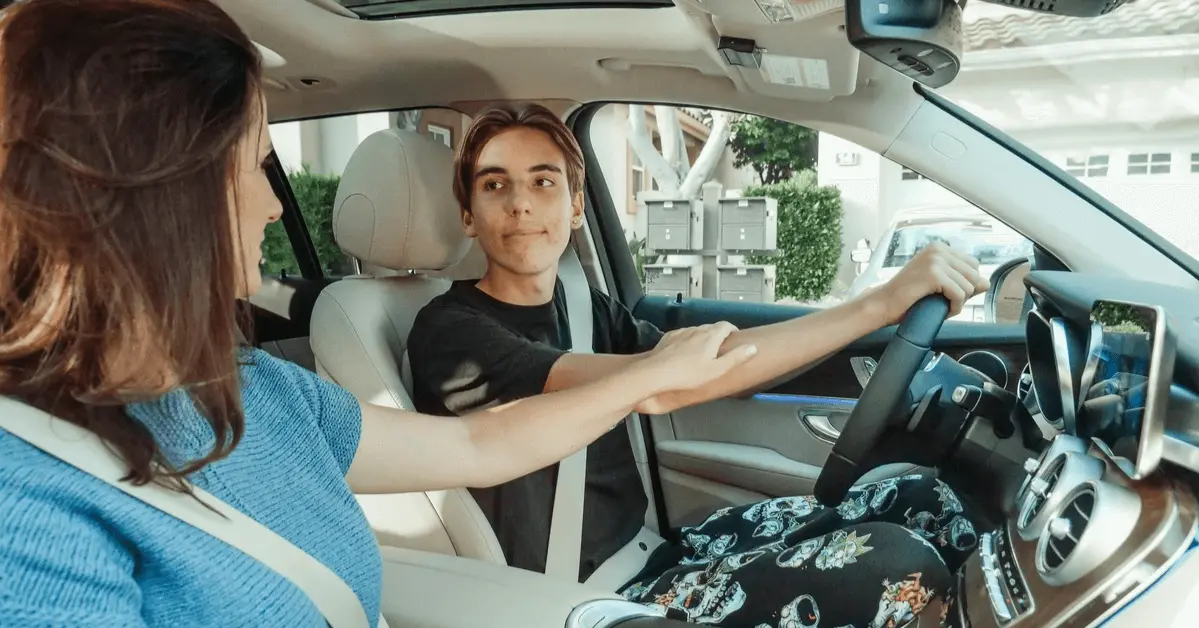
Most states apply a zero-tolerance law for underage drinking and driving. If you’re underage, pulled over on suspicion of drunk driving, and found to be impaired behind the wheel, you can immediately be charged with a DUI, have your driver’s license revoked for the duration of your visit to the U.S., and get your vehicle impounded.
Concerned about teenage drinking and driving? Learn how to talk to teens about underage drinking.
U.S. States With Looser Alcohol Laws for the World Cup
Some U.S. states that are hosting World Cup matches are changing some of their alcohol laws to better accommodate fans and businesses during the run of matches.
These changes do not affect the legal drinking age or the laws around drinking and driving; those rules and penalties still apply.
Most of the temporary law changes impact “last calls” (when restaurants and bars can serve the last drinks of the night) and expanded fan-related drinking zones. Here’s the lineup of current changes as of date of publication:
- Georgia – Open container laws are relaxed at sanctioned World Cup festivities
- New York – bars and restaurants across the state can serve alcohol until 4 a.m. throughout the tournament
- Kansas – bars and restaurants are permitted to serve alcohol for nearly 24 hours a day, from 6 a.m. – 5 a.m.
- Massachusetts – last call is extended until 3 a.m.; some towns can host designated public drinking districts for specific World Cup celebrations
- Missouri – similar to Kansas, bars and restaurants can serve alcohol from early morning until 5 a.m.
- New Jersey – the state is giving municipalities options to extend alcohol-service hours on a case-by-case basis
- Pennsylvania – Philadelphia area bars and restaurants can stay open an additional two hours
- Rhode Island – While not a state of a World Cup arena venue, this state neighbors Gillette Stadium and is hosting Ghana at one of its colleges. As such, a handful of towns have the option to extend indoor liquor licenses between 6/11 – 7/3. Last call will be at 3 a.m. for participating establishments
- Washington (state) – Expanded fan-zone indoor and outdoor alcohol service areas are popping up in major cities like Seattle, Spokane, and Vancouver
The U.S. World Cup runs from June 11 – July 19th.
Know the Basic Legal Limits
The basic legal limits for drinking are determined by your Blood Alcohol Concentration, or BAC. A BAC is measured based on the percentage of alcohol in your bloodstream. If your BAC is 0.02%, it means you have 2 parts alcohol for every 10,000 parts blood in your body.
The standard legal BAC for drivers over 21 in the United States is 0.08%, but this can differ in certain states. For example, Utah has a legal BAC of 0.05%.
The World Cup is being played across North America, including 11 U.S. cities. All football match venues are in states that enforce a 0.08% BAC limit, though you can still get pulled over for impaired driving while below that limit.
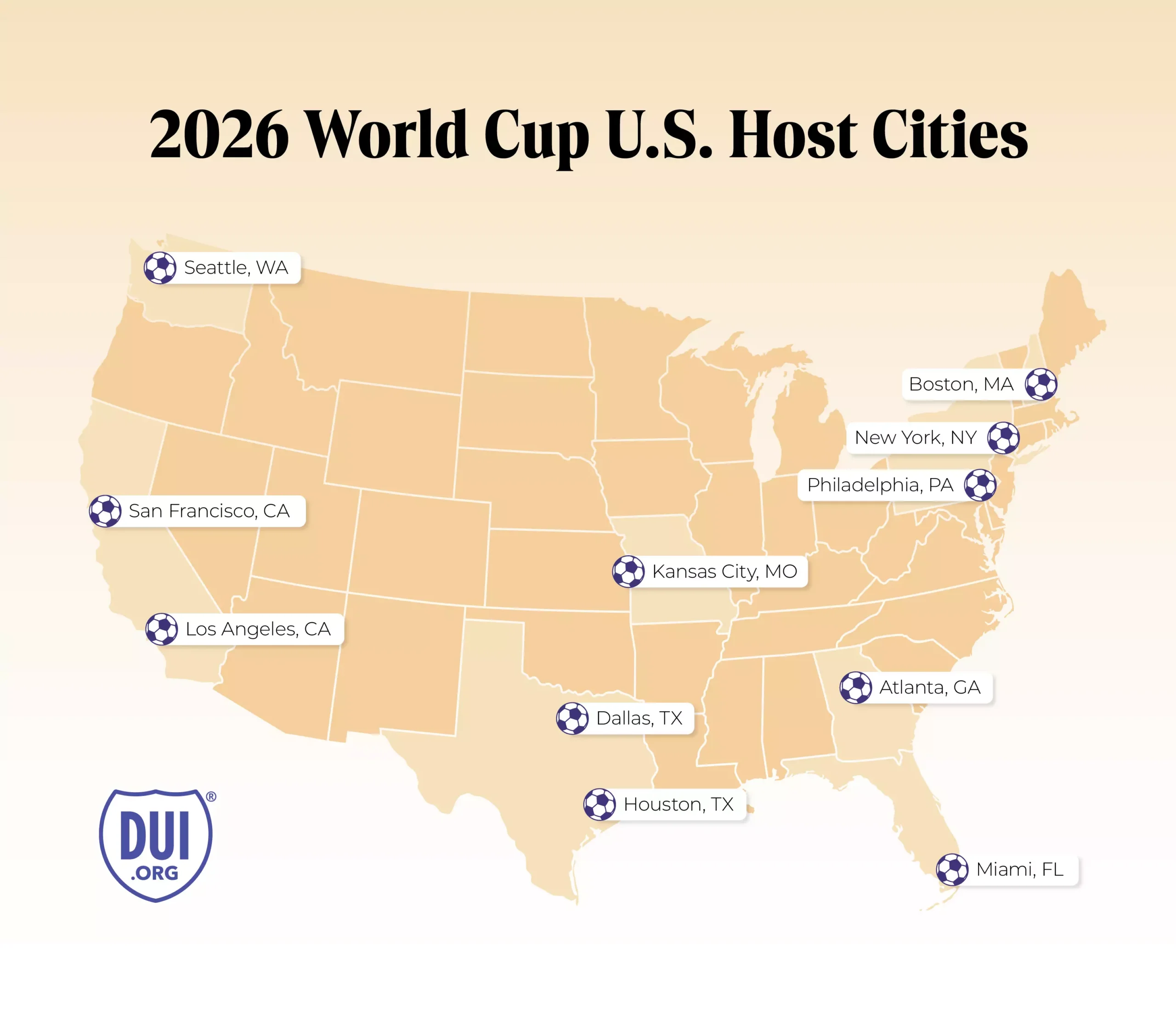
Hover over a city marker to see match details
You’re Expected to Drive Safely
You should not get behind the wheel of a vehicle if you’ve had too much to drink. You’re expected to make safe driving choices while visiting the U.S. That means:
- Following all traffic laws
- Minding the speed limit (U.S. measures this in miles per hour (MPH), rather than kilometers (KPH))
- Wearing your seat belt
- Not texting while driving

Limit distracted driving: Cell phone rules for drivers also vary by state; see the National Highway Traffic Safety Administration for more information.
Drugs and Prescriptions Count in a DUI Charge
It’s not just alcohol that can factor into a DUI charge. Drugs can also have an impact. This can include marijuana, opioids, and even prescribed or over-the-counter medication. Some prescriptions or over-the-counter medications, such as antihistamines or cold medications, can cause drowsiness or dizziness, which can affect your driving.
You’re not legally required to carry your prescription medications with you, but it’s important to keep track of your medication intake especially if you’re drinking. Know your limits, be aware of their side effects, and always err on the side of caution.
Can you get a DUI for marijuana? Learn about the U.S.’s marijuana DUI laws and penalties.
Each State Has Its Own DUI Laws
While there are basic guidelines that are easy to follow no matter which state you visit, each state has its own DUI laws.
- While the state standard legal BAC limit is 0.08%, Utah’s is 0.05%
- Most states enforce a zero-tolerance limit for underage DUI charges at a BAC of 0.02%, several states implement 0.00% or 0.01% limits
- Most states charge a first-time DUI as a misdemeanor, while select states classify it as a civil traffic violation (unless there’s an accident or injury)
How to Find Alternative Transportation
If you plan to drink during your World Cup visit, you may want to have someone be your sober driver. In the U.S., this is referred to as a designated driver. While most World Cup matches are being played in larger cities, there may not be substantial public transportation infrastructure.
You may want to familiarize yourself with the transportation options available in the U.S. city in which your team may be playing:
- New York has a vast subway system
- Los Angeles largely relies on the use of a car
- Atlanta’s MARTA system offers buses and trains
- Miami, Houston, and other cities have Waymo self-driving cars
If you already have Uber on your phone, you can use it across the U.S.; just make sure you update your location settings. You can also download the Lyft app, a similar rideshare system to Uber.

Want to dive deeper into state DUI laws? Explore this resource from DUI.org.
What Happens If You’re Pulled Over Under Suspicion of Drunk Driving?
Whether you’re pulled over by a police officer or forced into a DUI checkpoint, it’s important to comply with any law enforcement officer’s commands. Don’t pick fights or crack jokes; be mindful and attentive and follow their instructions. But also make sure you know your rights in the state you’re visiting.
What to Know About DUI Checkpoints
DUI checkpoints are designated areas where law enforcement officers stop vehicles to check for signs of impaired driving. Their goal is to enhance road safety during events when drunk driving incidents are more common. With World Cup football matches attracting hundreds of thousands of spectators, law enforcement may increase DUI enforcement around the stadium venues.
If you come upon a DUI checkpoint:
- Stay Calm: Take a deep breath and stay composed; you don’t need to create additional stress.
- Know Your Rights: Familiarize yourself with your legal rights at DUI checkpoints.
- Be Respectful: Politeness can ease tensions and make the process smoother.
- Consult an Attorney: If you’re arrested for DUI, request to speak with an attorney. A DUI attorney can guide you through your legal options.
If English isn’t your first language or you’re not confident in speaking English, you’re still expected to comply with physical commands. A language barrier may impact legal warnings and your sobriety test.
What Happens If You Refuse a Sobriety Test?
Field sobriety tests can include exercises like walking in a straight line or standing on one leg. You can refuse to take the tests but your refusal could have legal consequences like an arrest or revocation of your driving privileges during your visit.
Refusing a sobriety test doesn’t stop an officer from arresting you if they believe they have sufficient reason. All states enforce implied consent laws; By driving in the state, you automatically agree to chemical testing of your blood or breath if arrested for drunk driving.
So even if you refuse a field sobriety test, your BAC test can still result in a DUI charge.
DUI Penalties and Long-Term Impact
If you get a DUI while you’re visiting the United States, you may face additional complications because DUI laws intersect with federal immigration laws. To start, you could face state criminal penalties such as:
- Jail time of varying lengths, depending on your charges
- Fines and court fees that could top thousands of dollars
- Loss of driving privileges in the state where you were charged
Additional potential complications for international visitors can include:
- A revocation of your travel visa or immediate deportation
- Biometrics, fingerprints and photos shared with the National Crime Information Center (NCIC) database, which is accessible by federal border agents
- Ineligibility for future travel to the United States
Because your information will be shared with the NCIC, your DUI won’t magically disappear once you go back home. Biometric and criminal records are cross-checked during immigration checks while traveling. Your DUI charge may also impact your ability to travel to other countries.
Your Best Course of Action: Drive Safe and Sober
Even though you’re on vacation to watch and cheer on your team in the World Cup, the best defense against a DUI is to have a good offensive plan. If you think you might drink or use any substances during your visit, make a safe transportation plan that puts someone else in charge of driving.
To learn more about DUI laws, explore DUI.org for more reliable information on regulations, testing practices, and impaired driving rules across the United States.
Frequently Asked Questions About US Drunk Driving Laws for the World Cup
The information here does not constitute legal advice. Laws vary by state and readers should consult a licensed attorney in their jurisdiction; DUI.org is not a law firm.
Why do I need to know the DUI laws for the state I’m visiting?
While there are many drinking and driving laws that are standard, some states have different requirements. If you don’t follow that state’s requirements, you could face legal consequences or complications.
What are some ways a DUI could affect me in the future as an international traveler?
Some countries like Japan, Australia and Canada could deny tourists entry depending on the details of your charge. Additionally, it could affect your ability to live and work in the U.S. if you apply for a work visa or green card in the future.
What happens if I return home and ignore my DUI charge in the U.S.?
If you ignore your DUI charge in the U.S., you may be subject to an active bench warrant, face additional charges, and could be immediately detained upon attempted re-entry to the country.
Get support.
What is next? We can help you through the process. Give us a little information and we can support you through the next steps.
All fields are required.