
The article is for general informational purposes only and does not constitute legal advice. Laws vary by state and country, and readers should consult a licensed attorney in their jurisdiction. DUI.org is not a law firm. If you have immediate questions about a DUI, call a DUI.org state specialist at (877) 246-7808.
When facing the consequences of a DUI, a support group could help you through the toughest emotional parts. Learn more about in-person and online DUI support groups.
A DUI support group can help you cope with the personal and behavioral challenges that may accompany a DUI. Some groups focus on recovery and sobriety, while others are all about accountability, making healthier choices, and peer support.
While an attorney can help you navigate the legal aspect of a DUI, you may want to consider addressing the emotional and psychological parts of your DUI charge. That’s where a DUI support group might help.
Knowing your options, and how they suit your needs, can help you find the right DUI support group for you. While the information here doesn’t assist with your legal journey, we hope it’s helpful in your emotional recovery.
If you need immediate help, the Substance Abuse and Mental Health Services Administration (SAMHSA) hotline is 1-800-662-HELP (4357). If you’re experiencing a crisis, you can call, text, or chat the 988 Lifeline.
What Is a DUI Support Group?
A DUI support group is a community where people charged with or convicted of an impaired driving offense can discuss challenges, share experiences, and talk openly about their feelings. Some groups are specifically for DUIs, while others may be broader sobriety or recovery groups.
While not a complete list of options, here are some popular DUI support groups:
- Support Groups
- Websites/Forums
These groups aren’t a substitute for legal representation, professional treatment, or court-ordered programs, but they can provide another source of accountability and encouragement.
What Happens in a DUI Support Group?
The format can vary depending on the group, but meetings often involve sharing personal experiences, guided discussions, exploring educational topics, and conversations about staying sober.
You don’t have to share personal information if you’re not comfortable; listening to others' experiences can also be very valuable. But for those who share, most people talk about coping strategies, triggers, relationships, accountability, and challenges.

Need some support for how to deal with getting a DUI? Tips to manage your emotions.
How Do DUI Support Groups Help Long-Term?
Working through a DUI charge can take time and effort, which can be emotionally draining as the weeks and months go on. A support group can help you work on behavioral changes and avoid repeating the drinking behaviors that led to the offense.
A 2021 study in the journal Health Communication found that people with a DUI arrest history felt more motivated to cut back on drinking when they had strong support for staying sober. But this effect was stronger or weaker depending on their personal reasons for drinking in the first place.
What Are the Different Kinds of DUI Support Groups?
There are all types of DUI support groups to consider. While the information in this article isn’t legal or medical advice, we do want to provide a variety of options here.
In-Person Groups
In-person meetings facilitate face-to-face communication, making these groups more intimate and connected. Being in person can make it easier for some people to build relationships with others who understand what you’re going through. Some groups may also assign you a dedicated sponsor.
Online Groups
Online groups allow for peer support no matter where you live, which can be helpful for people who live in rural or remote areas or who have additional time constraints. Depending on group preferences, you can meet through video conferencing, chat groups, social platforms, or discussion boards.
Support Apps
Sobriety and accountability apps are exploding in popularity, putting a support system right in the palm of your hand. Each app is different, but common features include reminders, sobriety tracking, journaling, educational content, and goal setting.
Some apps require a monthly fee, and others are free but may have lax security and privacy protocols. It’s recommended to do some research, so you know what you’re paying for and how your data is being used.
Can Online and Virtual Support Groups Give Me the Same Support as In-Person Groups?
It all depends on your communication preferences. Online groups offer many of the same basic benefits, but some people find face-to-face interaction more meaningful. Others might feel more comfortable talking online. Again, this isn’t medical or legal advice. Talk with a specialist if you have questions or concerns.
The most useful support group format is the one where you can feel respected, supported, and encouraged to participate on a regular basis.

Your partner got a DUI. Here are five ways you can support them.
Benefits of Online or Virtual DUI Support Groups
If an online or virtual support group sounds more your speed, you’ll be happy to know there are numerous benefits to these groups, including:
- Flexible scheduling that can work on your timeline
- Being able to access support from the comfort of your own home
- Making connections and finding support from people outside your local area
- More anonymity or privacy (if you choose)
- Easier participation that doesn’t require transportation
- Access to a wider variety of meetings across your state, or even nationwide
Look for an online group with clear rules, appropriate boundaries for medical and legal advice, and respectful communication.
How Do Recovery and Accountability Apps Provide DUI Support?
Recovery and accountability apps are different from DUI support groups but can help you establish routines and track your progress around alcohol use. Depending on which app you choose, you may be able to record your sober days, set goals, receive reminders, and journal about your experiences. Some also have connections to resources and peer communities.
Benefits of App Support
App-based support can help with a variety of things, including:
- Easy use, with access anywhere, anytime
- Consistency between meetings
- Progress tracking that may give you a tangible reminder of your goals
- Journaling tools that may increase your self-reflection and help you recognize patterns

Looking for a DUI education class? Explore the options here.
Tools That Can Complement a DUI Support Group
Some of the tools mentioned in this section, including Keepr and Intoxalock, are owned, operated, and sold by Consumer Safety Technology, LLC and, like DUI.org, are part of the Mindr family of brands.
Combining a support group with other alcohol moderation tools can encourage more accountability, self-awareness, and opportunity for real change. Here are some of the tools you may want to consider adding to your arsenal.
Sober Journaling
Journaling gives you a private place to record your emotions, thoughts, challenges, and progress. Over time, journaling may help you identify triggers and recognize behavioral changes. It can also help you organize your thoughts so you can be prepared for your next group share.
Personal Breathalyzer
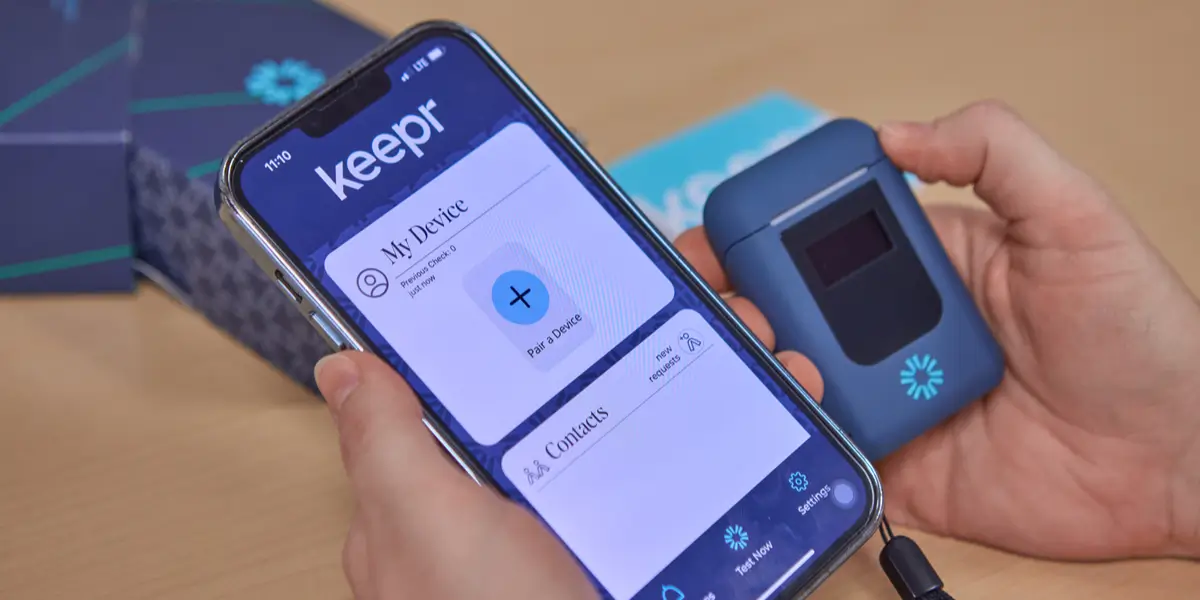
A personal breathalyzer is a small, handheld device that estimates your breath alcohol content, or BrAC. Whether you’re in addiction recovery, sober curious, or meeting a court ordered monitoring requirement, a personal breathalyzer like Keepr® can help you stay on track and meet your goals.
Voluntary Ignition Interlock Device
An ignition interlock device (IID) connects to your vehicle’s ignition system and requires you to give a passing breath sample before your car starts. If your Breath Alcohol Content (BAC) is below a preset limit, your car will start. If not, it won’t, and you may have to re-test or wait.
An IID could be required after a DUI, or it can be used voluntarily for additional accountability. An option like Intoxalock can be professionally installed.
Alcohol Monitoring Bracelets
Some monitoring devices can track alcohol-related data through wearable technology. For example, an alcohol monitoring bracelet can estimate alcohol through your skin and test at regular intervals. The readings lag consumption, and courts and supervising agencies accept only specific approved models. Be sure to consult with your attorney or monitoring authority to determine if a device is approved.
If consistent sobriety is a concern, this may be an option to support your goal.

Need to find a DUI class? Here’s a list of state-approved providers, including counseling centers, community colleges, and DUI program facilities.
How Is Technology Changing DUI Support Groups?
Technology has made DUI support more flexible, accessible, and convenient. If you can’t get to a meeting at a particular time or place, you can participate virtually or use an app. Some of the virtual or online options available are world-renowned and just as highly regarded as their in-person counterparts.
The Substance Abuse and Mental Health Services Administration website can point you to online support options, including Alcoholics Anonymous and Narcotics Anonymous. Again, the SAMHSA hotline is 1-800-662-HELP (4357) and the national suicide and crisis line is 988.
However, technology has some limitations. Some digital communities are higher quality than others, and not all online advice is accurate. Compare groups before you make a final commitment and do your research. Look for online outlets that have a professional pedigree or are led by accredited counselors or experts, and don’t treat what you hear in a digital community as professional behavioral, medical, or legal guidance.
Is It OK to Use AI as a DUI Support Tool?
AI can be useful for certain tasks, but it can’t, and shouldn’t, replace a support group or a qualified professional. AI may help you brainstorm journaling prompts or organize questions to ask a counselor, but it can’t reliably give you personalized legal advice, diagnose a substance-use disorder, or stand in for professional treatment.
Remember, AI is merely a machine learning program that predicts patterns and responds based on those predictions. It’s not capable of independent thought, isn’t qualified to provide legal or medical advice, and can’t give you personalized guidance based on your unique needs.
How To Find the Right DUI Support Group for You
Before you choose a DUI support group, you should identify what type of group you think will meet your needs.
- Do you want to talk to people who understand your experiences, or does talking with a group of strangers make you feel uncomfortable?
- Would you prefer a structured recovery program?
- Do you want something where you can drop in whenever it’s convenient?
These are some of the things to consider.
It helps to make a list of your ideal support system, then seek out the group that most closely meets those needs. A DUI support group can be a big part of a larger plan for moving forward, so pick one that works for your situation and goals.
In addition to a DUI support group, remember that DUI.org is here for you, too. We have a valuable online library of resources that can help you learn more about how to navigate the DUI process and get the support you need.
FAQs
These FAQs are for general informational purposes only and do not constitute legal advice. Laws vary by state, and readers should consult a licensed attorney in their jurisdiction; DUI.org is not a law firm.
How do I know if I need a DUI support group?
If you’re struggling with the emotional consequences of a DUI, looking for accountability, or want to talk with others who share your experience, a DUI support group could be the right choice for you.
Does it cost money to join or participate in a DUI support group?
It depends on which group you choose. Some peer DUI support groups are free. Others may charge for membership, meetings, or their overall program. There are also online communities and apps with different pricing options.
What if I don’t like the DUI support group that I chose?
You don’t have to stay in a support group that doesn’t feel right for you. There are many different groups with unique formats, personalities, and philosophies. Try to find a group you’re happy with and where you can consistently stay involved.
What if I can’t find an in-person DUI support group in my area?
You can look for recovery communities, virtual support groups, online meetings, counseling, support apps, and additional resources online. If you’re not finding something you click with, ask for a professional referral or see if anyone you know has recommendations. If you need immediate help, call the Substance Abuse and Mental Health Services Administration (SAMHSA) hotline at 1-800-662-HELP (4357) or the national suicide and crisis line at 988.
Get support.
What is next? We can help you through the process. Give us a little information and we can support you through the next steps.
All fields are required.